
What Are Piles?
Piles, also called hemorrhoids, are swollen veins in the lower part of the rectum or anus. They can cause pain, itching, and bleeding. Many people experience piles at some point in their lives. While mild cases often improve with simple care, severe piles may need surgery. In 2026, new treatments have changed how doctors manage this condition.
Overview of Open Surgery for Piles
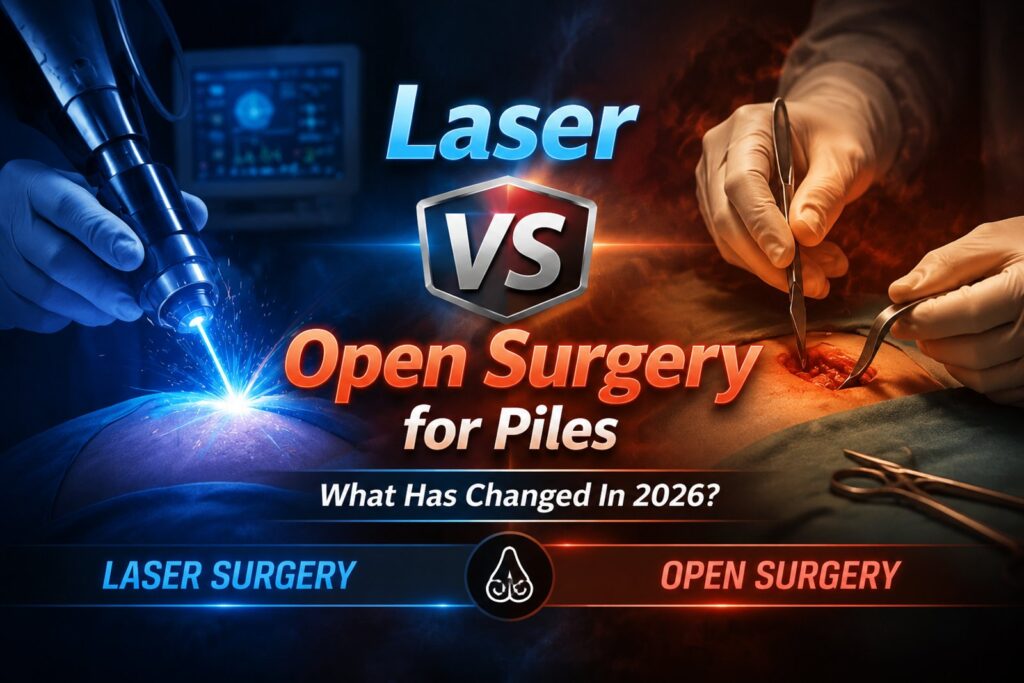
Open surgery for piles has been used for many years. In this method, a surgeon removes the swollen tissue using a scalpel. Usually, the patient receives anesthesia to avoid pain. After surgery, the area is stitched or left open to heal. Recovery can take a few weeks. Although open surgery is effective, it may cause discomfort and a longer healing time.
Overview of Laser Surgery for Piles
Laser piles surgery is a newer method. Here, doctors use a focused beam of light to shrink or remove the piles. This technique is less invasive than open surgery. As a result, patients often feel less pain and recover faster. In 2026, laser piles surgery has become more common in places like the US and India due to better technology and improved results.
Key Differences Between Laser and Open Surgery
Invasiveness: Laser surgery is less invasive than open surgery.Pain: Patients usually feel less pain after laser surgery.Recovery Time: Laser surgery often allows a quicker return to daily life.Scarring: Laser surgery leaves minimal or no scars, while open surgery may leave scars.Hospital Stay: Laser surgery may be done as a day-care procedure, but open surgery may need a longer stay.
What Has Changed in 2026?
In 2026, both laser and open piles surgery have seen important changes. For example, laser piles surgery 2026 uses advanced lasers that target only the affected tissue. This means less damage to healthy areas. Open piles surgery advancements include better pain control and improved surgical tools. Moreover, doctors now use enhanced imaging to plan surgeries more accurately. Patient experiences have improved, with fewer complications and faster healing. According to recent studies in medical journals, more people prefer laser surgery due to its comfort and quick recovery. However, open surgery remains important for severe or complex cases.
Pros and Cons of Each Method
Laser Surgery
Less pain after the procedureShorter recovery timeMinimal bleedingLower risk of infectionMay not be suitable for very large or complex pilesCan be more expensive
Open Surgery
Effective for all types of pilesLower chance of piles returning in some casesLonger recovery periodMore pain and discomfort after surgeryHigher risk of infection and scarring
Recovery, Risks, and Aftercare
After either surgery, proper care is important. For laser surgery, most people return to normal activities within a few days. Open surgery may need a week or more for recovery. In both cases, patients should keep the area clean and follow the doctor’s advice. Risks include bleeding, infection, and pain. However, these are less common with laser surgery. Eating a high-fiber diet and drinking plenty of water can help prevent piles from coming back. Always contact your doctor if you notice heavy bleeding or severe pain.
How to Choose the Right Treatment
Choosing between laser and open surgery depends on several factors. For instance, the size and type of piles, your overall health, and your budget all matter. Laser surgery is a good choice for mild to moderate piles and for those who want a quick recovery. On the other hand, open surgery may be better for large or complicated piles. It is wise to discuss all options with a specialist. They can help you decide which treatment is best for your needs.
For the latest piles surgery techniques and personalized advice, consult a specialist at Vitality Hospital. They can guide you to the best treatment for your situation.


 WhatsApp us